
By Will Layman
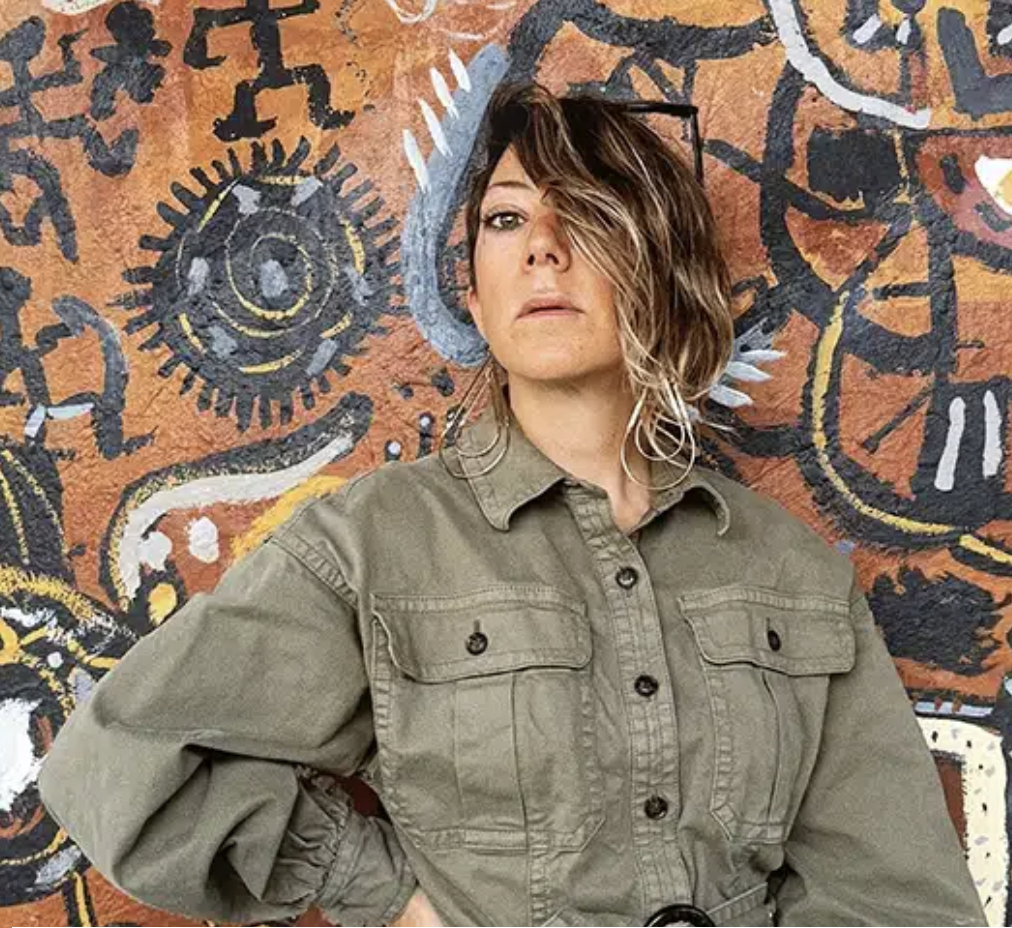
In a world that features billion-dollar pop divas (you know their names) and incredibly creative and technically dazzling jazz musicians (you have never heard the names of all but a tiny few), singer-songwriter Gretchen Parlato sits in a delicious middle at a mysterious intersection of contemporary soul and jazz. Her music is easy on the ears but also intimate and sophisticated. Her voice is immediately recognizable and distinctive, a slightly nasal curl of attitude, intimacy, and vulnerability. The tracks are groove-based but also likely to feature a glistening jazz piano solo.
Given that Parlato‘s music uses some devices of contemporary pop, how is her art different and, yes, deeper? (I won’t argue it is “better”.) The music on The Wise Ones, her new and outstanding album, is worth serious attention. Here is why.
There is no “formula” for this record. The Wise Ones is a collection of 11 songs that vary hugely from track to track. One amazing band plays most tracks—including drummer Mark Guilliana, bassist and guitarist Alan Hampton, and either Robert Glasper or Gerald Clayton on piano/keyboard—but they move across styles and feels with smooth ease.
The Stevie Wonder cover “If It’s Magic” grooves, but in 7/4 time. “Never Come Down” boasts a tricky chorus, with Parlato’s voice riding above an Afro-Cuban percussion groove before guest MeShell Ndegeocello comes in with a simple, rubbery bass line—no solos, no guitar or keyboard. “Mad Word” begins as an a cappella song with a vocal line beneath the melody, then adding Hampton’s atmospheric guitar and bass as guest Becca Stevens sings a second melodic part and the song blossoms into layers of resonating voices.
Guilliana’s drums power “Already Gone” with a Steve Gadd-ish syncopated pattern that sets up a wonderful electric piano solo by Glasper. It’s Gerald Clayton’s acoustic piano that shines on Hampton’s song “Capricorn”, which is sunlit with a South American groove and beautiful shifting harmonies that come through piano, guitar, and lush background vocals. “Block the Sun”, co-written by Parlato and Glasper, is a whisper of a song built on acoustic textures, but their other tune, “Rainbow”, almost feels like a hit, with its irresistible chorus.
No formula appears in the individual songs either. Even in this poppiest of songs, the three-minute-and-46-second “Rainbow”, the sound varies widely. Mark Guilliana’s solid backbeat is filled with sexy details and surprises. The few chords that dominate the song’s harmony are looped in such a way that is nearly Swift-ian, but Glasper attacks them and voices them with such variety that the effect is more… [Herbie] Hancock-ian.
Like a good pop song, “Rainbow” gives us verse-chorus structure, but it withholds its layered harmonies until the second chorus. Parlato layers them into a tricky bit of counterpoint leading to a breakdown section, but not using the chorus melody itself, but a new line that locks into the chorus once the band returns. It’s pop-ish but more detailed and delicious.
Parlato’s voice is a subtly expressive instrument, not just a vehicle. I don’t want to suggest that pop singing isn’t expressive. Whether we are talking about Whitney Houston or Carole King, Sam Cooke or Justin Timberlake, pop singers bring emotional power to their art. However, jazz singers, including Gretchen Parlato, do something more. In “The Wise Ones”, Parlato and her co-composer Amber Navran (who also adds woodwinds to the track) deliver vocal performances that swing a bit as they glide over the rhythm section, using rhythmic and tonal variation from the jazz tradition.Similarly, on “In My Bed”, composed by guitarist Josh Mease, Parlato gets the leeway to push and pull against the band in the moment. She sounds quite a bit like some of her influences: the bossa nova singers she adored as a young singer. By upbringing, training, and history, Parlato is a jazz singer. The jazz-drenched bossa nova singing of Joao Gilberto caught her ear early. She was the first singer to attend the Thelonious Monk Institute of Jazz Performance in 2001 and won the Monk Jazz Vocal Competition in 2003. Two years later, she sang with jazz great Wayne Shorter. Her last album was a set of duets with jazz guitarist Lionel Louke.
Gretchen Parlato expresses a sense of surprise in songs that connect like popular music. In Mease’s other song, “Landslide”, the band bops through sunny harmonies in 4/4, and Parlato addresses the melody informally. She also takes a chorus singing wordless vocals, improvising over the changes like, you know, a saxophone. Somehow, you can’t call it scatting (be-bop-a-doo-bee and all that), but maybe it is. It’s fresh and in the moment. The song is produced with a pop coating but the loose bones of a vintage jazz song.
However, Parlato’s vein of jazz is not the kind where you might catch her imitating Ella Fitzgerald on a program of Cole Porter songs (not that there’s anything, exactly, wrong with that). From the beginning of her career, she has been looking ahead. As this review tries to explain, this is not simple.
When a jazz saxophonist or guitarist mixes her training, craft, and improvisational skill with funk or other more contemporary forms, the result still reads as a progressive form of “jazz”. For a singer like Parlato, venturing into soul rhythms can seem to blur the line between your art and that of pop or soul singers who lean toward jazz. How should listeners hear this kind of groove-forward vocal music?
The Wise Ones is her seventh recording. Featuring many of the musicians she has worked with across her career, it is the perfect place to first encounter her. I’m still calling it jazz, but maybe we shouldn’t. We can just call it joyful, sublimely crafted music.